

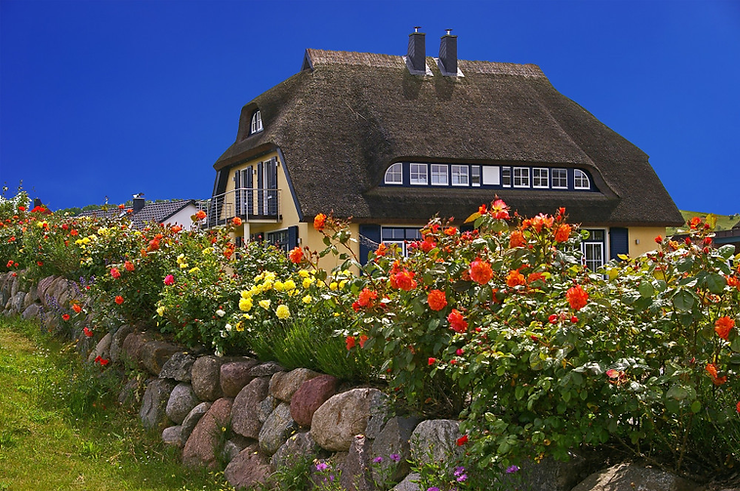
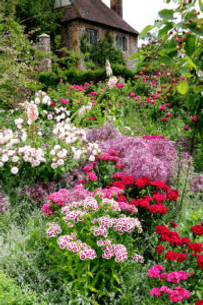
Whenever I hear the term cottage garden, I conjure up images of hidden oases of beautiful flowing flowers nestled behind old thatched roofed houses in the Cotswolds of England. Some may call them English gardens, but there is a slight distinction. So, what is a cottage garden? It was one of the 2021 garden trends and still is a garden trend for 2022. If you are yearning for a simpler time that oozed serenity, then you’ve come to the right place. Read more about this popular trend.
Cottage Garden
What is a Cottage Garden?
According to the Collins English Dictionary a cottage garden is “an informal style of garden which has beds planted with a great variety of traditional flowers”.
Traditional flowers were only one small component of the typical cottage garden. Vegetables and fruit trees were the keystone of the garden. When cottage gardens originated in rural areas of England, people had to be self-sufficient. They lived long distances from any local markets. Therefore, their gardens consisted of not only flowers, but also fruit trees and vegetables to sustain their families. It is said that the fragrant flowers were grown close to the home to mask the odor emanating from their houses.

If you are a history buff and would like to read a long narrative of how a cottage garden originated and evolved through the years, click The Cottage Garden and Its Origins.
Why a Cottage Garden?
English gardens and cottage gardens are very similar, however English gardens tend to be a bit more tame and manicured than cottage gardens.
A cottage garden consists of not only an array of flowers, plants and shrubs packed together in a harmonious way, but open spaces connected by stone, gravel or paved walkways.
Incorporating a cottage garden into your yard will add a bit of romance from a past era, slower and peaceful respites from modern life, and an explosion of fragrances, colors and textures to tickle your senses.
Cottage gardens are sustainable and help the environment by attracting wildlife including hummingbirds, butterflies, and bumblebees.
Mainstays of a Cottage Garden
Cottage gardens exude comfort and a feeling of welcome. They say “come in, stay awhile”. Cottage gardens have an abundance of climbing vines, grand flowering bushes and a multitude of old fashioned flowers such as delphinium, hollyhocks, catmint, and roses climbing trellises. Herbs and other edibles are also prevalent in the garden.
The cottage garden is planted close to the house, usually framing it, and should complement its exterior, which will guide its layout and materials.
Cottage gardens have been described as organized chaos! When planting your flowers, take into consideration their light and soil requirements, their sizes when mature, not only width but height, and whether or not they are invasive, creepers, or vine-like. When you plant the flowers, plant en masse. This appeals to the senses and creates a more flowing effect.
For more information on how to create a sustainable garden from scratch, read “Low Maintenance Flower Garden/ Sustainable and Beneficial”.
Elements of a Cottage Garden
1. A Low Fence, Stone Wall and Gate
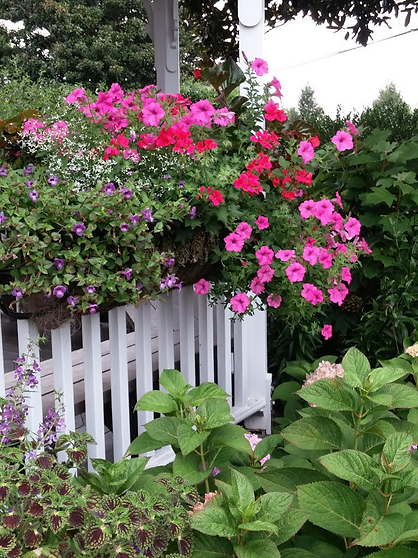
Back in the day a low fence was used to keep livestock corralled. Now, a low fence conveys a sense of welcome and neighborliness to passers-by. It allows people to sneak a peek of your lovely garden. The fence should complement your home with rustic materials such as painted wood or bent willow. It also serves important functions, such as supporting tall rambling stems of flowers, adding separation to your garden, and adding a little neatness to your yard.
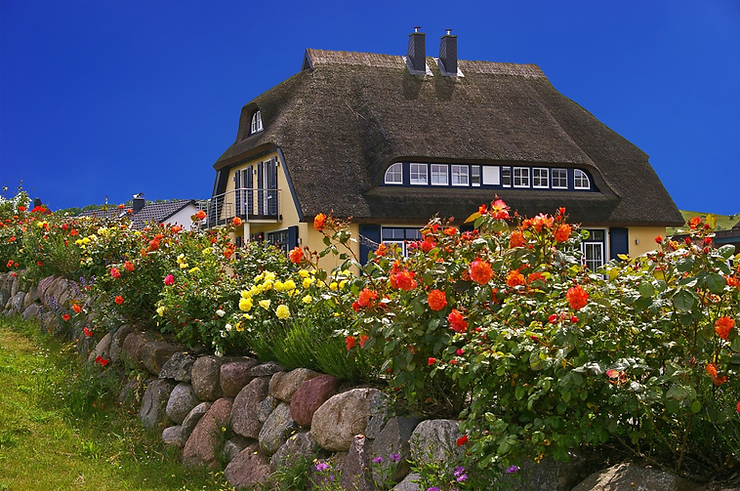
Low stone walls function the same way as picket fences, and should also complement your style of home. The walls add distinction between areas of your garden in addition to highlighting specific flowers.
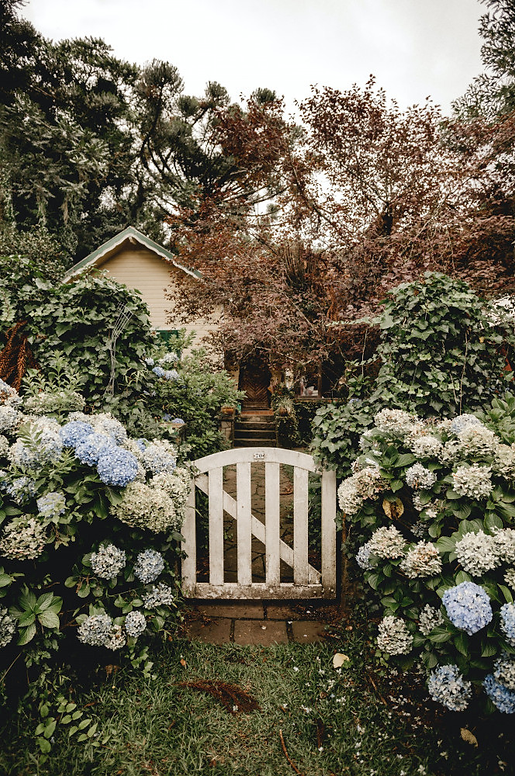
Gates leading to your garden should be low and welcoming. You want to encourage people to come in and take a stroll, not discourage them with a tall stockade-style gate.
2. Hedges
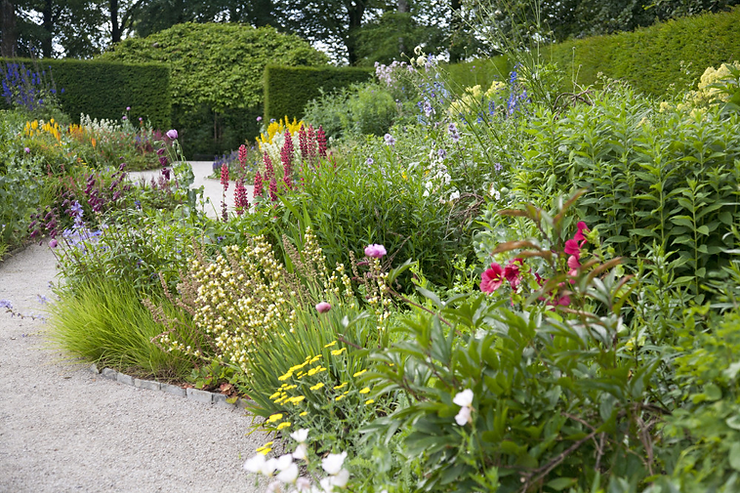
Hedges denote different areas of your garden. For instance, a perennial garden from a vegetable garden, or a secret reading nook from an open play area. Adding broad-leafed evergreens to your garden as a hedge will maintain interest all year long. Some examples are boxwood, low growing holly, junipers, euonymus, rhododendrons and azaleas.